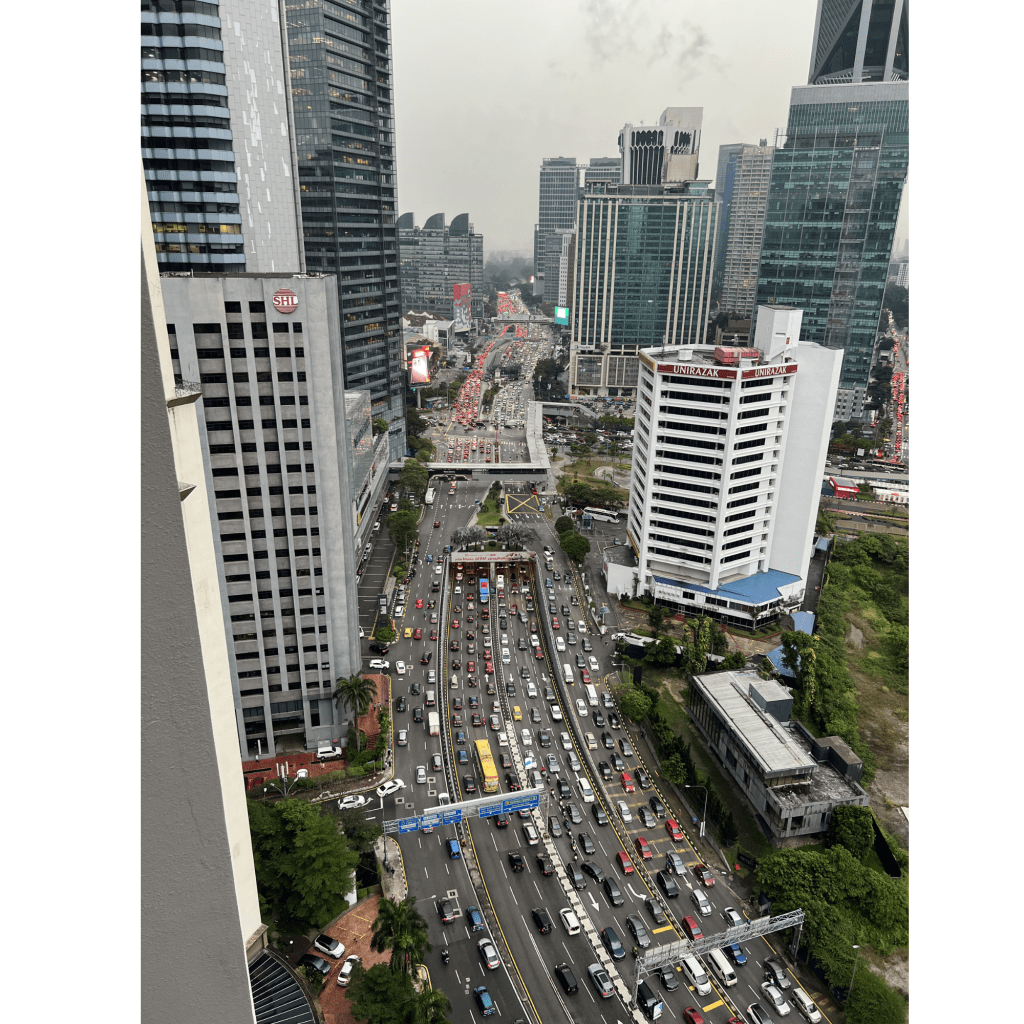
One question has stayed with me after working in different urban contexts:
Who exactly are we trying to engage when we say “the community”?
In a rural village, the answer may seem relatively straightforward. In a city, it rarely is.
Urban communities are dynamic, diverse and interconnected. People belong to multiple social networks, spend much of their day beyond their neighbourhoods, and often place their trust in relationships that have little to do with geography. Yet many of the participation models we continue to use were developed around assumptions that fit rural settings far better than urban ones.
As humanitarian crises increasingly unfold in cities, this raises an important question:
Are we still designing participation as if every city were a village?
Much of our practice still assumes clearly defined communities, recognised local leaders, shared public spaces and enough time for people to attend meetings or workshops. It assumes that information flows through established community structures and that “the community” is a relatively cohesive social unit.
For many urban contexts, these assumptions no longer hold.
Today, more than 56% of the world’s population lives in urban areas, and according to the United Nations, that figure is expected to approach 70% by 2050. At the same time, humanitarian crises are becoming increasingly urban. Earthquakes, floods, conflict, displacement, disease outbreaks and climate-related disasters are affecting cities where millions of people live in dense, highly connected—but often socially fragmented—environments.
Humanitarian organisations have made significant progress in strengthening accountability systems, feedback mechanisms and community engagement. Yet we have perhaps spent less time asking whether the participation models underpinning those efforts still reflect the realities of urban societies.
The challenge is not simply to adapt existing approaches. It is to rethink how accountability, participation and community engagement work in cities.
Cities change the rules of engagement
Urban emergencies are fundamentally different from many of the contexts where humanitarian approaches to community engagement were originally developed.
Cities are not simply larger villages. They are complex systems.
When an earthquake strikes a city, humanitarian organisations enter an environment where municipal authorities, public utilities, transport networks, hospitals, schools, private companies, landlords, community organisations, faith institutions and informal groups are already interacting—sometimes effectively, sometimes not.
Unlike many rural emergencies, humanitarian agencies are rarely the primary service providers. Instead, they become one actor within a much broader urban ecosystem.
This has important implications for participation. Community engagement is no longer about building relationships with a single, identifiable community. It becomes an exercise in understanding how an entire social system functions, who influences it, and where trust already exists.
The International Institute for Environment and Development (IIED) argues that the future of humanitarian action is increasingly urban and that responses should strengthen existing local governance systems rather than create parallel structures.
The first challenge is defining “community”
One of the most persistent misconceptions about urban settings is that communities do not exist.
They do. But they rarely fit the way humanitarian organisations have traditionally understood them.
In many rural settings, community identity is closely linked to geography. In cities, it is often defined by relationships, interests and shared experiences rather than place alone.
The same person may simultaneously belong to a neighbourhood association, a faith community, a WhatsApp group, an association of migrants from the same region, a motorcycle taxi cooperative, a football club, a parents’ committee, an online activist network and a professional association.
Which of these communities matters most?
The answer depends entirely on the issue being discussed.
Someone may trust neighbours when discussing security, rely on religious leaders for health information, seek employment advice through digital networks and organise disaster preparedness through local youth groups. The networks people turn to change according to the problem they are trying to solve.
This challenges one of our most common assumptions. In urban contexts, community is no longer defined primarily by geography; it is relational. Understanding those relationships is often more important than defining neighbourhood boundaries.
Instead of asking:
“Who are the community leaders?”
perhaps the better question is:
“How do people organise themselves?”
Informal networks are often the first responders
If communities in cities are defined by relationships rather than geography, the next question becomes: which relationships matter most during a crisis?
One of the most consistent findings across research on urban humanitarian response is the importance of informal actors.
When crises unfold, local shopkeepers extend credit, taxi drivers transport injured people, faith organisations open their doors as temporary shelters, neighbourhood volunteers organise food distribution, women’s groups identify vulnerable households and youth organisations help clear streets after floods.
Many of these actors never appear in formal coordination structures. Yet they often become the backbone of community resilience.
Research from the Overseas Development Institute (ODI) suggests that humanitarian organisations systematically underestimate these informal systems because they are difficult to identify through traditional stakeholder analyses.
Ironically, we often invest time in creating new community committees instead of recognising and strengthening the networks that communities already know and trust.
For me, this raises an important reflection. Our first responsibility may not be to create new participation structures, but to understand and support those that already exist.
Participation has an opportunity cost
One of the least discussed barriers to participation in urban programming is also one of the most obvious: participation takes time.
Many participatory approaches assume that people can attend workshops, focus groups, consultations and repeated community meetings. Yet for many urban residents, time is a scarce resource.
Daily wage workers lose income when they attend meetings. Street vendors cannot leave their stalls. Domestic workers travel across the city before dawn. Parents spend hours commuting. Young people often combine work with education.
When participation requires sacrificing income or essential responsibilities, attendance becomes a privilege rather than a right. Yet low participation is often interpreted as a lack of interest or community disengagement.
From an accountability perspective, this also raises an uncomfortable question: whose voices are we hearing, and whose are we unintentionally excluding because our engagement processes are designed around our own assumptions rather than people’s realities?
More often than not, the problem lies in how participation has been designed.
This is not unique to urban programming, but the realities of urban life tend to make the challenge more visible. Too often, engagement activities are organised around institutional schedules rather than people’s daily routines.
Designing meaningful participation therefore requires flexibility. It may mean shorter consultations, evening meetings, mobile engagement teams, pop-up conversations in markets, listening in transport hubs, digital channels where appropriate, or integrating engagement into activities that communities are already attending rather than asking them to join another meeting.
The question shifts from:
“How can communities participate in our programme?”
to:
“How can our programme fit into people’s lives?”
There may be no community hall
Traditional participation approaches often begin with a practical question:
“Where shall we hold the community meeting?”
Urban settings challenge that assumption.
There may be no community centre, no village square and no recognised meeting place. Instead, conversations take place wherever people already live, work and interact: health centres, markets, public transport, schools, places of worship, neighbourhood cafés, sports clubs, hair salons and, increasingly, digital spaces such as Facebook groups and WhatsApp communities.
Community engagement therefore begins by understanding where conversations are already happening.
Listening becomes less about organising meetings and more about recognising the spaces—both physical and digital—where people naturally exchange information, seek advice and build trust.
But identifying where participation happens is only part of the challenge. We also need to understand who is, and who is not, represented within those spaces.
Representation becomes far more complicated
If urban participation rarely takes place in a single location, it is equally unlikely to be represented by a single individual or group.
Who represents an urban community?
Residents? Tenants? Landlords? Refugees? Street vendors? Women working outside the home? Persons with disabilities? Young people? Informal settlement committees?
The answer is almost always: all of them.
Urban populations are diverse, mobile and constantly changing. Representation therefore becomes an ongoing process rather than a one-off stakeholder mapping exercise.
This is where development practice offers valuable lessons.
Following the 2010 Haiti earthquake, community planning processes supported by local organisations and international partners moved beyond consultation towards genuine co-design of reconstruction priorities.
Residents mapped neighbourhood assets, identified risks, prioritised investments and negotiated directly with local authorities. Participation evolved from consultation into shared planning.
Participation evolved from consultation into shared planning.
Similarly, Medellín’s long-term urban resilience strategy transformed community organisations from advocacy groups into partners in disaster risk governance.
Participation became governance. Not a project activity.A similar evolution can be seen in Medellín’s long-term urban resilience strategy, where community organisations became partners in disaster risk governance rather than simply advocates or consultees.
These experiences suggest that meaningful participation is not about identifying a single representative voice. It is about creating processes that enable diverse groups to influence decisions over time.
In cities, representation is therefore less about finding the community leader and more about ensuring that different perspectives are continuously recognised, heard and reflected in decision-making.
Taken together, these reflections point to a broader challenge. In urban settings, meaningful participation is less about creating opportunities for people to engage and more about designing systems that can accommodate diversity, mobility and multiple forms of representation.
This also reminds us that participation is not a fixed activity. It should evolve alongside communities, changing contexts and the relationships that develop over time.
Emergency participation and development participation are not the same
Humanitarian practitioners often think about participation through the lens of emergency response, while development practitioners tend to approach it through governance, empowerment and long-term institution building.
Cities require both.
During the emergency phase, organisations need rapid engagement to understand needs, identify vulnerable groups, communicate risks and establish trusted feedback channels. As the response moves into recovery and longer-term development, participation should deepen. Communities should have increasing opportunities to influence planning, service delivery, monitoring and local governance.
Rather than viewing participation as a single set of activities, it is more helpful to think of it as an evolving process.
| Emergency Response | Recovery | Development |
| Information sharing | Consultation | Co-design |
| Feedback mechanisms | Joint planning | Co-governance |
| Community volunteers | Neighbourhood committees | Community institutions |
| Needs assessments | Participatory planning | Participatory budgeting |
| Complaint mechanisms | Community monitoring | Citizen oversight |
Participation is therefore not static. It evolves as contexts evolve.
One of the challenges I have observed is that organisations often continue using emergency engagement approaches long after communities are ready to become genuine partners in decision-making. Consultation remains the default, even when the context calls for collaboration and shared ownership.
Trust travels differently in cities
If participation evolves over time, trust is what allows that evolution to happen.
Trust remains one of the strongest predictors of effective humanitarian action. Yet in urban settings, trust rarely follows organisational charts.
People may place greater confidence in their pharmacist, their imam, their football coach, a local radio presenter, a building caretaker or the administrator of a neighbourhood WhatsApp group than in any humanitarian organisation.
The Ebola response in Freetown demonstrated this clearly. Early communication campaigns struggled to gain acceptance. As responders increasingly worked through trusted local actors, neighbourhood volunteers and existing community structures, community acceptance improved significantly.
Communities organised surveillance systems, adapted local practices and supported safer burials.
The lesson was not simply that communities needed better information. They needed communication to come through relationships they already trusted.
Ultimately, it was trust—not information alone—that transformed communication into collective action.
Looking back across these examples, a common pattern begins to emerge. Effective community engagement in cities depends less on creating new participation mechanisms than on understanding the relationships, networks and institutions that people already rely on. The challenge is not simply to engage communities—it is to engage with the social systems that communities have already built.
Digital engagement expands participation—but does not replace it
Digital technologies have become an integral part of everyday life for many urban communities. WhatsApp, Telegram, Facebook, community forums, SMS platforms, interactive voice response systems and digital feedback tools all create new opportunities for organisations to listen, communicate and respond at scale.
But digital engagement also introduces new forms of exclusion.
Not everyone owns a smartphone. Affordable internet access is far from universal, and digital literacy varies widely across different groups. Women, older people and other marginalised populations may face barriers that are less visible than those associated with face-to-face participation but are equally important.
Used well, digital channels can broaden participation, reach people more quickly and create additional opportunities for feedback. Used poorly, they risk amplifying the voices of those who are already connected while overlooking those who are already excluded.
Technology should therefore complement—not replace—face-to-face engagement.
Digital platforms can expand participation, but they cannot substitute the trust, relationships and local knowledge on which meaningful community engagement ultimately depends.
Community engagement should become community partnership
If urban participation is built on relationships, trust and diverse forms of representation, then consultation cannot be the end point.
One of the greatest opportunities for both humanitarian and development organisations is to move beyond engaging communities towards partnering with them.
The real measure of participation is not how many meetings we organise or how many people attend them. It is the extent to which communities influence the decisions that affect their lives.
Across many urban contexts, this shift is already taking place. Communities are increasingly becoming partners in neighbourhood planning, service design, risk mapping, community monitoring, participatory budgeting, citizen science, disaster preparedness and the monitoring of public services.
Examples can be found around the world.
In Pakistan, participatory mapping initiatives have enabled residents of informal settlements to document flood risks and negotiate with authorities over infrastructure improvements and eviction concerns.
Across several Latin American cities, participatory budgeting has enabled citizens to influence municipal investment priorities directly.
UNICEF’s Child-Friendly Cities Initiative has promoted meaningful adolescent participation in urban planning, while UN-Habitat’s Participatory Slum Upgrading Programme has shown that neighbourhood improvements are more sustainable when communities co-design interventions alongside municipalities rather than simply validating externally developed proposals.
Across these examples, participation is no longer understood as consultation.
It becomes co-production, where communities are not simply consulted about decisions but help shape them from the outset.
Perhaps this is one of the most important shifts facing both humanitarian and development organisations. Community engagement is not simply about improving communication. It is about creating the conditions for shared ownership, shared responsibility and shared decision-making.
Accountability requires systems thinking
Urban accountability cannot be achieved organisation by organisation. Communities experience cities as integrated systems.
A family living in an informal settlement depends simultaneously on:
municipal services…
schools…
health centres…
transport…
private landlords…
markets…
community organisations…
humanitarian agencies.
Their problems rarely fall neatly within one mandate. This makes closing the feedback loop considerably more complex.
Many of the reflections in this article are not unique to urban settings. Communities have always organised themselves through relationships, local institutions and informal networks. What cities do is make that complexity more visible—and challenge humanitarian and development organisations to engage with it differently.
This becomes particularly evident when we think about accountability.
Urban accountability cannot be achieved organisation by organisation because communities do not experience cities one institution at a time. They experience them as interconnected systems.
A family living in an informal settlement may depend simultaneously on municipal services, schools, health centres, transport, private landlords, markets, community organisations and humanitarian agencies.
Their challenges rarely fall neatly within a single organisational mandate. A complaint about drainage may involve municipal authorities. Concerns about violence may involve the police. Housing issues may depend on landlords, while waste management may require coordination between several public institutions.
Closing the feedback loop therefore becomes considerably more complex. Accountability depends not only on listening well, but also on coordination, transparency and being honest about who is responsible for what.
This is one reason why Area-Based Approaches have gained increasing attention. Rather than organising programmes around sectors alone, they focus on neighbourhoods, shared outcomes and collaboration across multiple actors.
For communities, this means participating in decisions that cut across different services instead of navigating multiple disconnected systems. From a localisation perspective, it also means strengthening existing local governance and coordination mechanisms rather than creating parallel structures around individual projects.
Ten reflections I keep coming back to
Looking back across different urban emergencies, recovery programmes and development initiatives, I find myself returning to the same reflections time and again. They are not universal rules, and every context is different. Rather, they are lessons that have challenged—and gradually reshaped—my own thinking about participation, accountability and community engagement.
1. Communities are defined as much by relationships as by geography.
Understanding where people live is only the starting point. Trust, influence and mutual support often travel through networks that extend well beyond neighbourhood boundaries.
2. Informal actors often matter more than we realise.
Some of the most influential people during a crisis may never appear in a stakeholder map, yet they are often among the first people communities turn to.
3. Participation needs to fit into people’s lives.
Low attendance does not necessarily signal disengagement. Sometimes it simply reflects that we have designed participation around our schedules rather than theirs.
4. Participation rarely happens in one place.
Meaningful engagement begins by understanding where people already meet, exchange information and build relationships—whether those spaces are physical or digital.
5. Trust deserves as much attention as communication.
Effective communication depends not only on what we say, but also on who communities trust to say it.
6. Consultation should be the beginning, not the destination.
As programmes evolve, participation should evolve with them, creating greater opportunities for communities to influence decisions and monitor progress.
7. Build on existing systems before creating new ones.
Communities, local organisations and public institutions are already solving problems long before humanitarian actors arrive. Whenever possible, our role should be to strengthen those systems rather than replace them.
8. The most important voices are often the ones we do not hear.
One question I have learned to ask repeatedly is not simply Who is participating? but Who is missing—and why?
9. Accountability is rarely achieved by one organisation alone.
Closing the feedback loop often depends on municipalities, community organisations, service providers and humanitarian actors working together around shared responsibilities.
10. Participation is ultimately about influence.
The question I increasingly find myself asking is not how many meetings were held or how many people attended.
It is much simpler than that:
Did what communities shared actually influence the decisions that were made?
Rethinking participation for an urban future
Urbanisation is changing humanitarian and development practice. But perhaps the most significant shift is not demographic—it is conceptual.
Throughout this article, I have argued that many of the assumptions underpinning our participation models deserve to be revisited. Not because they are wrong, but because the contexts in which we work are becoming more diverse, interconnected and complex.
This is, of course, not unique to cities. Communities have always organised themselves through relationships, local institutions and informal networks. What urban contexts do is make that complexity more visible—and challenge us to engage with it differently.
Meaningful participation begins when organisations stop treating participation as an activity they organise and start recognising it as a social system that communities have already built.
People already organise themselves. They solve problems, share information, support one another, negotiate with authorities and create networks of trust long before humanitarian or development organisations arrive.
Our role is not to invent participation. It is to recognise it, strengthen it and create the conditions for it to genuinely influence decisions.
Perhaps that is the real challenge for accountability.
Not simply listening more.
Not creating more feedback channels.
Not organising more meetings.
But ensuring that the knowledge, priorities and capacities that already exist within communities shape the decisions that affect their lives.
Communities have not become less engaged. If anything, they have become more connected, more organised and, in many contexts, more complex than the models we continue to use to understand them.
Our approaches to accountability, participation and community engagement need to evolve accordingly.
Because, ultimately, accountability is about more than collecting feedback. It is about shifting power so that communities can genuinely influence the decisions that affect their lives.
In increasingly urban societies, that may be one of the most important lessons we can take forward.
References and Further Reading
- Core Humanitarian Standard (CHS): https://www.corehumanitarianstandard.org/
- IFRC – Community Engagement and Accountability: https://www.ifrc.org/community-engagement-and-accountability
- IIED – The Future of Humanitarian Crises is Urban: https://www.iied.org/future-humanitarian-crises-urban
- IIED – Learning from Community Planning Following the Haiti Earthquake: https://www.iied.org/learning-community-planning-following-the-haiti-earthquake
- ODI – Informality in Urban Crisis Response: https://odi.org/en/publications/informality-in-urban-crisis-response/
- Global CCCM Cluster – Area-Based Approaches in Urban Settings: https://www.cccmcluster.org/resources/hlp-area-based-approaches-urban-settings-compendium-case-studies-2019
- UN-Habitat – Participatory Slum Upgrading Programme:https://unhabitat.org/programme/the-participatory-slum-upgrading-programme-psup
- UNICEF – Child Friendly Cities Initiative: https://childfriendlycities.org/
- BMJ Global Health – Community Engagement During the Ebola Response in Urban Sierra Leone: https://pmc.ncbi.nlm.nih.gov/articles/PMC10395029/

 Inside the feedback loop
Leave a comment