There’s a question that has followed me throughout my career in humanitarian work: are we truly accountable to the people we serve?
For over 20 years, I have worked across Latin America, Europe, Central Asia, and Asia-Pacific, supporting emergency response, protracted crises, and development programmes. Throughout these experiences, one thing has remained constant: the gap between what we intend to do — and what communities actually experience.
My work focuses on closing that gap.
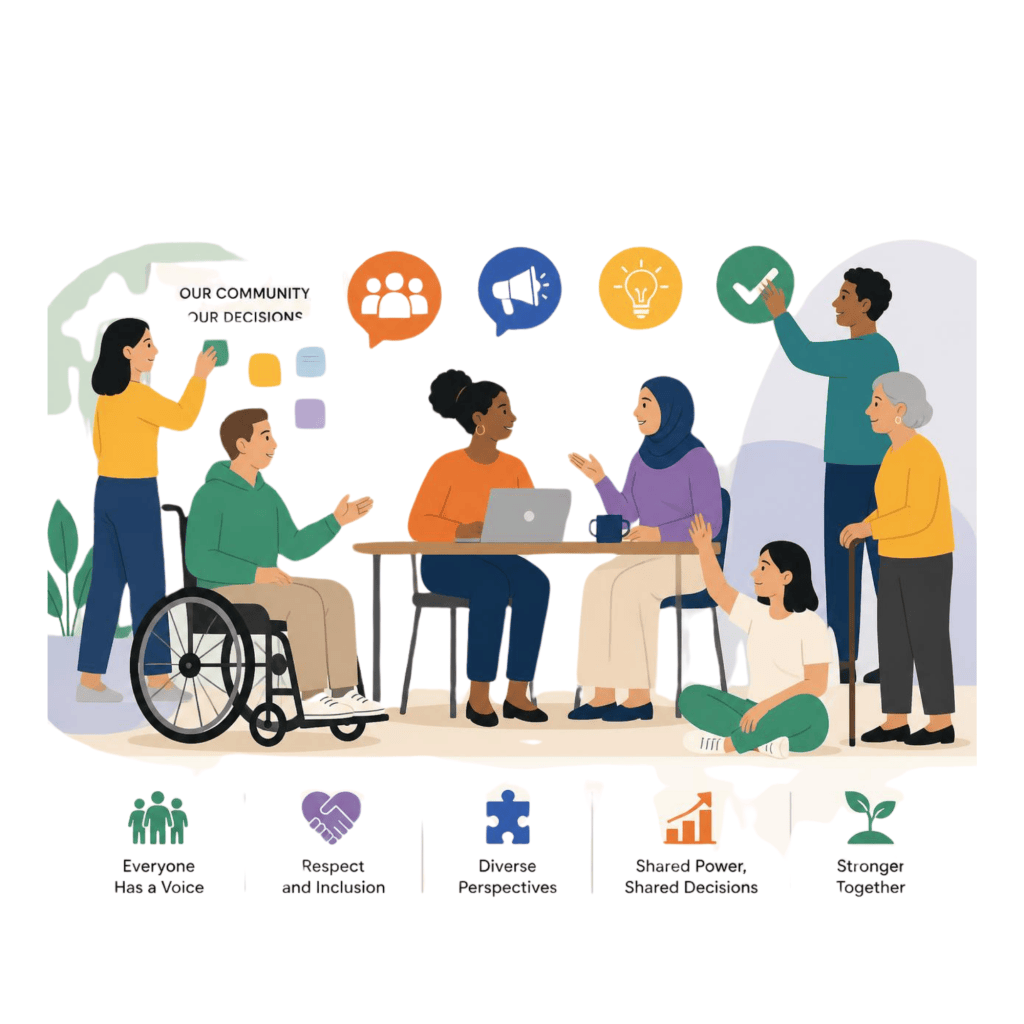
I specialise in Community Engagement and Accountability (CEA), Risk Communication and Community Engagement (RCCE), and Social and Behaviour Change (SBC), supporting organisations to move from consultation to meaningful participation — where people are not only heard, but able to influence decisions that affect their lives.
At regional and global levels, I have worked with the International Federation of Red Cross and Red Crescent Societies (IFRC), advising and supporting operations across more than 50 countries. My work has focused on integrating community insights, perception data, and behavioural evidence into decision-making — particularly in complex contexts such as the Ukraine crisis, COVID-19 response, and large-scale population movements.
But accountability is not only built at scale.
Today, I continue to engage at multiple levels: as a member of the Community Engagement and Accountability roster of the Swedish Red Cross, supporting emergency response when needed, and as a volunteer with the Spanish Red Cross, staying connected to local community realities and participation in practice.
Alongside my operational work, I contribute to sector learning and reflection. I have supported global publications and guidance with IFRC and WHO on community engagement, trust, and risk communication in health emergencies — areas that are becoming increasingly critical in a context shaped by misinformation, polarisation, and declining trust.
This is also what led me to create Inside the Feedback Loop — a platform dedicated to exploring how accountability, participation, and behaviour change actually work in practice. Through conversations with practitioners, tool reviews, and field reflections, the platform aims to bridge the space between policy commitments and operational realities.
Because accountability is not a checkbox. It is a relationship.
It requires listening — consistently and intentionally. It requires responding — visibly and responsibly. And it requires the willingness to adapt, even when that challenges our assumptions.
At a time when the humanitarian and development sectors are under increasing pressure — from shrinking funding to growing mistrust — strengthening accountability, trust, and localisation is not optional. It is central to our relevance and legitimacy.
I am particularly interested in roles and collaborations that focus on:
• Strengthening accountability to affected populations (AAP)
• Integrating social science and behavioural insights into programmes
• Advancing localisation and locally led approaches
• Designing and improving feedback systems and participatory mechanisms
• Supporting organisations to translate commitments into practice
If you are working on similar challenges, or looking to strengthen community-centred approaches in your work, I would welcome the conversation.